

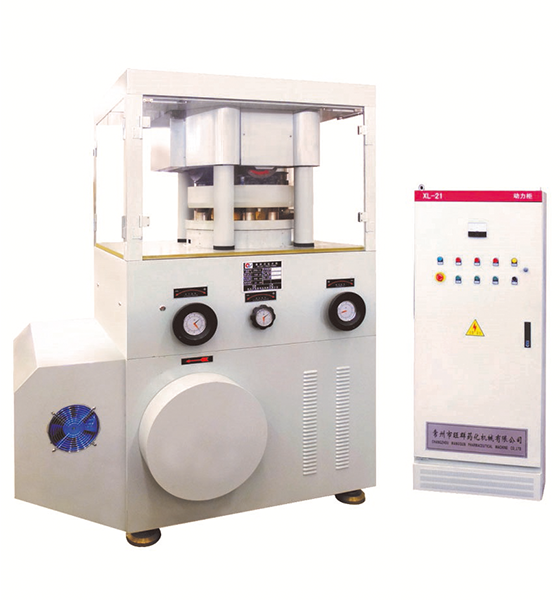
Regulatory Standards for a Pharmaceutical-Grade Tablet Press
Industry Background and Market Demand
The pharmaceutical industry operates under stringent regulatory oversight to ensure drug safety, efficacy, and consistency. Tablet presses, a critical component in solid dosage manufacturing, must comply with rigorous standards such as Good Manufacturing Practices (GMP), FDA 21 CFR Part 11, and EU Annex 1. The global demand for high-quality tablet presses is driven by increasing generic drug production, biologics expansion, and the need for precision in controlled-release formulations.
Pharmaceutical manufacturers prioritize equipment that minimizes contamination risks, ensures batch-to-batch uniformity, and integrates seamlessly with Process Analytical Technology (PAT) for real-time quality control. As regulatory agencies tighten compliance requirements, suppliers must innovate to meet evolving expectations while maintaining cost efficiency.
Core Concepts and Key Technologies
A pharmaceutical-grade tablet press must adhere to compression force consistency, particle size distribution control, and cross-contamination prevention. Key technologies include:
- Single-Punch vs. Rotary Presses: Single-punch machines suit small-scale production, while rotary presses (e.g., Fette 3090 or Korsch XL 400) enable high-speed output (up to 1,000,000 tablets/hour).
- Force Feeder Systems: Ensure uniform powder flow, preventing weight variation.
- Automated Control Interfaces: Comply with FDA 21 CFR Part 11 for electronic records and audit trails.
- Dedusting Units: Minimize particulate contamination in compliance with EU GMP Annex 1.
Product Structure, Materials, and Manufacturing Processes
Structural Components
- Frame: Stainless steel (316L or 304) with electropolished surfaces to resist microbial adhesion.
- Punches and Dies: High-alloy tool steel (e.g., DIN 1.2379) with chromium nitride coating to extend lifespan.
- Compression Rollers: Hardened steel with precision bearings to maintain consistent compression force.
Critical Manufacturing Processes
- Passivation: Removes free iron particles to prevent corrosion.
- Cleanroom Assembly: Conducted in ISO 7 or higher environments to meet USP <800> standards.
- Validation Protocols: IQ/OQ/PQ (Installation/Operational/Performance Qualification) per ISO 13485.
Key Factors Affecting Quality and Performance
1. Compression Force Variability (±5% tolerance): Affects tablet hardness and dissolution rates.
2. Tooling Alignment: Misaligned punches cause capping or lamination defects.
3. Lubrication Systems: Food-grade lubricants must not interact with APIs (Active Pharmaceutical Ingredients).
4. Environmental Controls: Humidity and temperature fluctuations impact powder flow properties.
Supplier Selection Criteria
Pharmaceutical companies evaluate tablet press suppliers based on:
- Regulatory Compliance: Documentation of GMP, CE, and FDA approvals.
- Change Control Procedures: Transparent updates to validated systems.
- Service Network: Availability of spare parts and field technicians.
- Data Integrity: Integration with SCADA or MES (Manufacturing Execution Systems).
Common Industry Challenges
- Cross-Contamination Risks: Inadequate cleaning validation leads to batch recalls.
- Tooling Wear: Frequent replacement increases downtime and costs.
- Scale-Up Issues: Lab-scale presses may not replicate production performance.
Application Scenarios and Case Studies
- Generic Drug Manufacturers: High-speed rotary presses reduce unit costs for large-volume production.
- Biotech Firms: Containment systems prevent potent compound exposure (OEB 4-5).
- Continuous Manufacturing: Hybrid systems combine direct compression with real-time monitoring.
Current Trends and Future Outlook
1. Continuous Manufacturing: Replaces batch processing for faster throughput.
2. AI-Driven Predictive Maintenance: Reduces unplanned downtime via sensor analytics.
3. Sustainable Design: Energy-efficient motors and reduced material waste.
4. Flexible Tooling: Quick-change systems accommodate multiple tablet shapes.
FAQ Section
Q: How often should tablet press tooling be replaced?
A: Typically every 5–7 million compressions, but depends on material abrasiveness and maintenance.
Q: What is the impact of punch tip geometry on tablet quality?
A: Flat tips produce standard round tablets; concave tips reduce sticking but may increase friability.
Q: Can a tablet press handle hygroscopic powders?
A: Yes, with humidity-controlled feeding systems and modified dwell times.
Conclusion
Pharmaceutical-grade tablet presses must balance regulatory compliance, operational efficiency, and scalability. As the industry shifts toward continuous manufacturing and digital integration, suppliers must innovate while maintaining E-E-A-T (Experience, Expertise, Authoritativeness, Trustworthiness) in design and validation. Future advancements will focus on sustainability, automation, and stricter contamination controls to meet global regulatory demands.
Copyright © 2025 Changzhou Wangqun Pharmaceutical Machinery Co., Ltd. Todos los derechos reservados.
Mapa del sitioEste sitio web utiliza cookies para garantizar que obtenga la mejor experiencia en nuestro sitio web.
 English
 Pусский
 Français
 العربية



 Teléfono
Comentario
(0)